

Screeching Bats, A Fractured Skull, and The City of the Great King: Thank you, Mr. Barclay
I was hoping to venture inside, but I was almost certain men were not allowed. I was in Jerusalem and wanted to see up close the famous rock lintel inside the small synagogue near the women’s section at the Kotel (“Wailing Wall”). Thankfully, Carla agreed to enter on my behalf and to take on the difficult task of capturing B-roll footage for our documentary about the Temple.

Capturing video at this iconic place meant carrying camera equipment into an area where worshippers were seeking solitude and personal quiet time for devotion, but my brave wife was up for the adventure. Trying not to be intrusive, I watched her gingerly make her way through a crowd of Jewish women who were waiting in line to approach the wall. Just down from the crowd was the synagogue, which was actually just a tiny room used for prayer and study. With a bit of trepidation, she climbed a few worn and aged steps and made her way into the small stone structure, which had been built against the famed western wall of the Temple Mount.
The one-room synagogue lay beneath a stone ramp built in the Middle Ages. The ramp led up to the Mughrabi Gate, where non-Muslim visitors could access the Haram Al-Sharif and the platform where the Jewish Temple had once stood so proudly in the days of Jesus. Made of stones from various historical periods, the small room was lined with copies of the Talmud along its southern wall. In the center, several women sat in plastic chairs facing a large area toward a massive stone that is some 21 feet long, nearly 7 feet high, and weighs approximately 50 tons. All agree that this massive stone was the lintel above what had once been a massive opening or gateway into the lower section of the Temple complex, a gateway built during the reign of King Herod the Great.

Today, this lintel and former entrance to the Temple Mount Complex is known as Barclay’s Gate. But why? And how are Thomas Jefferson and the Churches of Christ connected to this place where Jewish women often gather to pray?
Who is James T. Barclay, and why is his name permanently associated with one of the four major entryways on the western side of the Temple complex? More on this in a moment, along with some of the history behind the rather mysterious and clandestine events surrounding the discovery of this now-sacred area.
The First Temple
To better understand Barclay’s Gate, let’s first examine the basic history of the sacred Temple of the Jews. The Hebrew word bay’it is translated in some versions of the Bible as “temple,” and in others as “house” or “dwelling,” and in each case it refers to the permanent structure housing the tabernacle and its furnishings (Brown, 108). Like the tabernacle, the Temple was considered a house or dwelling for Yahweh and the place where His presence was encountered.
During the Israelite exodus from Egypt, the subsequent conquest of Canaan, and the period of the Judges, God’s tent of dwelling had, to some degree, been mobile, resting in places such as Gilgal, Shiloh, Nob, and Gibeah. However, in the 10th century BC, it came to permanently reside in Jerusalem, where Solomon erected an elaborately furnished temple on Mount Moriah, which was also the place where Abraham was called to offer his son Isaac (Genesis 22:2; 2 Chronicles 3:1). This same mountain came to be known as Mount Zion, the temple Mount, and to Muslims as the Haram al-Sharif. This era of the temple, which lasted until its destruction, is known by historians and archaeologists as the FIRST Temple.
Over three hundred years after Solomon built the temple, the Babylonians destroyed it in 586 BC. It, along with much of Jerusalem, was destroyed in a massive fire, and many Jews, along with captives from other nations, were taken as slaves to Babylon.
The Second Temple
Approximately seventy years after the destruction of the Temple, Persia conquered Babylon and took possession of its captives, including the Jews. According to both the Bible and the discovery of the famous Cyrus Cylinder, many of the captives were set free and allowed to return to their respective homelands. We also know from these sources that the Persian government helped finance the rebuilding of their temples and places of worship, and as the book of Ezra reveals, this was true for the Jews as well (Ezra 1:1-11).
Between 538 and 520 BC, construction of the temple began once more, this time under the direction of Zerubbabel, the grandson of King Jehoiachin of Judah (1 Chronicles 3:17). This new era of construction became known as the Second Temple period, which, for most of its duration, was officially under the control of foreign rulers (e.g., the Persians, Greeks, Ptolemies, and the Seleucids). According to the books of Ezra and Haggai (Ezra 3:12; Haggai 2:1-3), this Second Temple paled in beauty and grandeur compared to the one built by Solomon.
Ezra records that at the dedication of Zerubbabel’s Temple, those who had seen the First Temple wept, presumably saddened by its comparison to its former glory (Ezra 3:12). However, as history reveals, an expanded and greater version of the Second Temple would gradually emerge. Its initial improvements came during the Hasmonean reign, not long after the Hellenistic period. During the Roman Empire, even greater improvements were witnessed, many on a grand and elaborate scale.
Don't stop reading! The bats and fractured skull are coming, along with an important lesson.
Those larger improvements came not long after the rise of King Herod the Great. In 37 BC, the Romans appointed Herod, a cunning politician and military leader from Idumea, as King over Jerusalem and the territory of Judea. To garner favor with a nation that had largely despised and rejected him, he developed a plan to renovate and expand the beloved Jewish temple. His plans were ambitious and included an entire temple complex, which was arguably one of the great wonders of the ancient world.
Under Herod’s direction, the inner sanctuary and temple proper, along with the court of the women, adjacent service buildings, the royal stoa, open-air plazas, and porticoes would reach their peak of sophistication and beauty. The temple had even mesmerized the disciples of Jesus, who remarked, “What wonderful buildings and stones” (Mark 13:1-2). Descriptions from various sources reveal its size and grandeur to be majestic.

To construct such an elaborate structure, an appropriate, structurally sound foundation was needed, but the mountain on which the previous temple stood was simply too small to accommodate the plans for such a sophisticated design. The first order of business was to enlarge the platform to accommodate the expansion. So, in 23 BC, workers enlarged the base of Mount Moriah by building gigantic retaining walls; one along the eastern edge, another to the south, and then a colossal wall on the west.
In some places, the retaining walls are estimated to be 15 feet thick, with one of its largest stones weighing approximately 600 tons (45 X 11 X 15, Bahat). Huge portions of these foundational walls still stand, including the highly visible and important shrine known as the Kotel, or the Western Wall. Some even refer to it as the Wailing Wall because each year, on the 5th of Av, Jews from around the world still gather at its base to mourn the destruction of the temple and to sing the songs of lamentation from the book of Jeremiah.
From the Western Wall Plaza at the Kotel, 28 rock-hewn courses are visible, with another 17 rows beneath. In the first century, the first course would have been exposed to the open air, and visitors could have walked beside this gargantuan wall, gazing up at an incredible 196-foot structure, with the temple sanctuary's ground floor at its top. The existing platform and its retaining walls give us an indication of the size and enormity of this sacred precinct. Some 26 NFL-size football fields could be placed on its surface, and by comparison, would have covered more than 4 times the area of the Acropolis in Athens (34 acres vs. 7 acres).

Entering and exiting the temple via one of the large retaining walls mentioned above could be done from several locations. Along the southern wall, evidence reveals two separate entry points (or gates), one known as the triple gate and the other as the double gate. The gates, which can be seen today, were reconstructed in the 16th century, but the remains of the original gate structures are visible in the unique Greek and Roman-style headers and in the door jambs and lintels. Some refer to these as the “Huldah gates,” but the term most likely referred to entry points from an earlier period located on the temple platform just north of the Royal Stoa.
Hang in there! The bats are coming along with Barclay's grand discovery.
Along the eastern retaining wall stood the Shusan Gate, where the red heifer was presented for sacrifice and where the scapegoat exited on the Day of Atonement (Numbers 19:1-10; Leviticus 16:8-10). Some have suggested that this is the gate Jesus entered on Palm Sunday, in fulfillment of the messianic prophecy in Zechariah 9:9 (cf. Ezekiel 43:1-5). The gate at this location today is known as the Eastern Gate, sometimes called the Golden Gate. Remains of a Hasmonean gate (141 to 37 B.C.) are located below the ground at this same site. This gate was accidentally discovered in 1969 by a university student from Jerusalem University College, who allegedly fell into a subterranean passage while walking at the base of the city walls of Jerusalem after a heavy rain (Fleming, 1983).
Along the northern wall, there was yet another prominent entry point into the Temple. From there, visitors could enter through the Sheep’s Gate mentioned in Nehemiah (3:1), which also appears to be identified in John’s Gospel (John 5:2). A little farther west along the northern wall stood the Fortress of Antonio, which Herod named after Mark Antony, a Roman general and ally of Julius Caesar. This fortress was designed to protect the Temple’s most geographically vulnerable area and to provide temple officials and Roman soldiers with quick access to the Temple grounds.

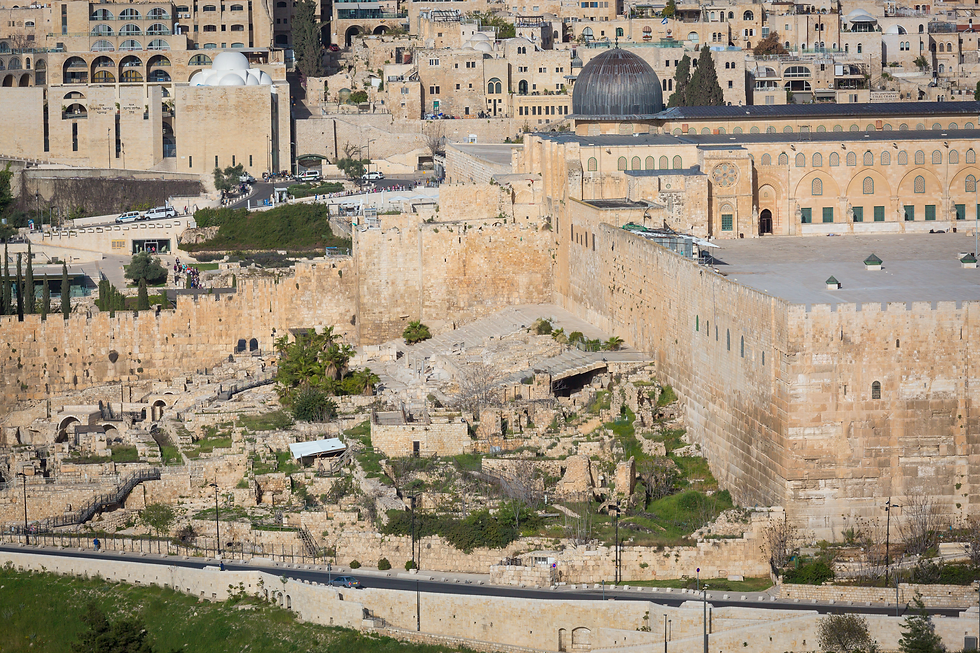
On the western side of the Temple, Herod expanded the temple platform on a massive scale by erecting a massive retaining wall that extended into the central valley. This wall is approximately 1,600 feet in length and stands about 105 feet high at its southern end. Along this colossal wall, four entrances were constructed, each identified today by the names of modern explorers who discovered them. Wilson’s Arch supported a bridge that gave access to the temple from the upper city. Warren’s Gate, located to the north, is still visible but was closed and permanently sealed in the 12th century. Today, it is accessible only underground and remains a popular place for Jewish women to gather and pray.
The most impressive of the four western gates was located at the southwestern corner, where explorer Edward Robinson discovered the remains of an ancient archway jutting out from the retaining wall. His discovery corroborates the testimony of Josephus, who described an elaborate staircase leading up to the Royal Stoa, perched atop the southwestern portion of the temple. The base structure of that staircase was discovered in 1838, and we now know that some 45 feet from the main wall, the stairs turned southward and descended into the central valley, where they joined an area crowded with shops and Jewish ritual baths, known as Mikvehs.
Barclay’s Gate and Early Explorations
(Here come the bats and fractured skull)
The last of the four major entry points along the western side of the Temple complex is known today as Barclay’s Gate and is, of course, the subject of this article. It lies just north of the grand staircase that led up to the Royal Stoa, but like the other original gateways into the Temple, it is no longer accessible. Barclay’s Gate was filled with rocks and sealed sometime during the 10th century. This now well-known gate, where Jewish women often gather to pray, had been forgotten and lost to memory until 1850, when a medical doctor named James Turner Barclay from Virginia discovered it in a bit of a clandestine operation. But who in the world is James Barclay, and how did he discover it?
James Turner Barclay was born in 1807 in Hanover County, Virginia, to Thomas Barclay, the Quaker apologist and close friend of American presidents George Washington and Thomas Jefferson. Educated at the University of Virginia, James Barclay later earned a medical degree from the University of Pennsylvania and became both a physician and a pharmacist.

Throughout his life, he served in numerous educational and governmental roles and was also known for purchasing the deteriorating Monticello property from the family of Thomas Jefferson. He had high hopes of establishing a successful silkworm farm on Jefferson’s property, but it lasted only four years before he was forced to sell.
Above all, Barclay was known as a devoted Christian and humanitarian, helping thousands of Jerusalem residents during a major malaria outbreak in 1851. He also became the first missionary sponsored by the American Christian Missionary Society of Cincinnati, Ohio. Its first president, Alexander Campbell, one of the early preachers of the churches of Christ in America, helped orchestrate the sending of Barclay and his family on a major missionary campaign to Palestine. Barclay and his family labored for about 8 years in Palestine, mostly in Jerusalem.
From Barclay’s books and memoirs, we learn of the arduous journey across the Atlantic and the horseback trip from Tyre to Jerusalem, which in total took 5 months. On February 10th, 1851, he and his wife, Julia Ann, and their three teenage children arrived in Jerusalem for the first time and took up residence near the Damascus Gate. Facing opposition from local religious groups, he was able to baptize only 31 individuals over the next three years. In 1854, they returned to the United States and would eventually make it back to Jerusalem, working for several more years before events connected with the American Civil War forced their permanent return to the United States in 1865.
In addition to Barclays’ missionary efforts, he also found time to explore and write about his observations of the land of the Bible. Archaeology had not yet developed as a scientific discipline, and in the 1800s, much of what was known about Jerusalem was assembled through tradition and the works of ancient historians such as Josephus, Philo, and others. Much about the city from the time of Jesus remained unknown, yet, thanks to the work of explorers such as Edward Robinson, Charles Warren, Conrad Schick, and others, the ancient world of the New Testament gradually became clearer.
Though not nearly as well-known, James Barclay and his voluminous book, The City of the Great King, made significant contributions to the growing body of knowledge about the world of the Bible. Because of Barclay, we now know more about the design of the Temple complex and key aspects of its construction. As will be shown below, he is credited with the discovery of Zedekiah’s Cave, so-called, which legend connects with Zedekiah’s escape from the Babylonian siege (Jeremiah 39:4-5). In truth, the cave served as a quarry for the construction of ancient Jerusalem.
Many of Barclay's discoveries, including Zedekiah’s Cave, were made under the cover of darkness. It seems local Muslim officials weren’t always keen on foreigners and non-Muslims defiling the sacred ground beneath their Noble Sanctuary, where the Dome of the Rock and the Al-Aqsa Mosque now stand atop the Temple Mount. Nevertheless, Barclay was determined to better understand ancient Jerusalem and uncover its hidden treasures. As described in his book, he also wanted to “explore the magnificent subterranean remains of the gorgeous palaces of King David, Solomon, and various other monarchs of former times” (Barclay, 459).

Barclay’s book likewise describes how he and his son, along with a colleague, often conducted nighttime explorations through underground passages and caves. While the following quote is lengthy, I believe you will find it highly interesting and helpful in understanding the curiosity and courage exhibited by early explorers:
Having received some intimation of the existence of an entrance to a very extensive cave near the Damascus gate…we provided ourselves with all the requisites for such a furtive adventure—matches, candles, compass, tap-line, paper and pencils—a little previous to the time of closing the gates of the city, we sallied out at different points, the better to avoid exciting suspicion, and rendezvous at Jeremiah’s pool, near to which we secreted ourselves within a white enclosure surrounding the tomb of a departed Arab Sheikh, until the shades of darkness enabled us to approach unperceived, —when we issued from our hiding place amid the screeching owls screaming of Hawks howling of jackals and the chirping of nocturnal insects. (Barclay, 460-461).
His account continues with a description of their location and the process of digging through soft dirt, during which they had, fortuitously, noticed the day before his dog digging with great intent, as though he were looking for something. It was at that exact location that they uncovered a hole extending through the 10-foot-wide wall and began worming their way inside. The following describes what happened next.
On scrambling through and ascending the inner side of the wall, we found our way apparently obstructed by an immense amount of soft dirt, which had been thrown in, the more effectually to close up the entrance; but, after examining a while, discovered that it had settled down in some places sufficiently to allow us to crawl over it hand and knee; which having accomplished we found ourselves enveloped in the thick darkness, that might be felt, but not penetrated by all our lights so vast is this hall. For some time, we were almost overcome with feelings of awe and admiration, and I must say apprehension too, from the immense impending vaulted roof, and felt quite at a loss to decide in which direction to wind our way… The cave is upwards of 3000 feet in circumference, supported by great numbers of rude natural pillars. At the southern extremity, there is a very deep and precipitous pit, in which we received a very salutary warning of caution from the dead—a human skeleton! Supposed to be that of a person who, not being sufficiently supplied with lights, was precipitated headlong and broke his neck, or rather his skull, I should judge, from the fracture I noticed on picking it up!... We noticed bats clinging to the ceiling in several places in patches varying from 50 to 150, hanging together, which flew away at our too near approach, and for some time continued to flit and scream around and about our heads in rather disagreeable propinquity… A few Arabic and Hebrew inscriptions (though too much effaced to be deciphered) prove that the place was not unknown to the Jew and Arab. Indeed, the manner in which the beautiful white solid limestone rock was everywhere carved by the Masons rough chisel into regular pillars, proved that this extensive Tavern, though in part natural, was formerly used as the grand quarry for Jerusalem. (Barclay,461)
Barclay’s discovery of this ancient underground stone quarry was of tremendous importance. It revealed the largest artificial cave in Israel (roughly 97,000 square feet) and provided physical evidence of quarrying methods from biblical times. The sheer scale of the underground chamber—yielding an estimated 350,000 tons of rock—demonstrated the massive engineering feats required to build ancient Jerusalem. Archaeologists and historians believe that this high-quality limestone, known as Melekh (royal) stone, was extensively quarried by King Herod for the Second Temple and the Western Wall (Lewy, 187-196).
Barclay’s Gate: Its Discovery and Importance
Beyond Barclay’s discovery of “Zedekiah’s Cave,” the place in Jerusalem today that most bears his memory, as discussed above, is the gate/entry along the western wall. What was well known to first-century visitors to the Temple (and to others in ancient history) but later sealed and forgotten was rediscovered by James Barclay during one of his nightly explorations. His book, The City of the Great King, describes the discovery. The quote that follows comes after his description and examination of the double-gate entrance on the southern wall of the Temple Mount:
I discovered an ancient doorway, quite similar to this [the double gate], on the West side, about 270 yards from the southwest corner, which is also walled up…This gate is without doubt one of the two mentioned by Josephus as leading into Parbar [the court];and is an important element in the restoration of the temple. It also affords another proof of the reliability of the Hebrew historian. It is immediately beneath the present Mugaribeh Gate…During the period of my admission into the Haram enclosure I discovered in this immediate vicinity, on the interior, a portion of a closed gateway, about fourteen or fifteen feet wide; but whether it is connected with that on the exterior, I was not enabled to determine, for the guards became so much exasperated by my infidel desecration of the sacred room, el-Borak, where the great prophet tied his mule on that memorable night of the Hegira, that it was deemed the part of prudence to tarry there but a short time and never to visit it again. (Barclay, pp. 490-91)
What Barclay describes in his book has been well documented by others and is evident in the photographs I have included. His discovery, though often overlooked, was monumental, and the following reasons help explain why.

First, it provided further evidence of the Second Temple's existence and its often-debated location. This on-the-ground evidence of the Herodian expansion of the Temple Mount has also enabled scholars to correlate the physical ruins with historical texts such as the Bible and the Mishnah. These findings have helped corroborate the testimony of writers like Mark regarding the disciples of Jesus and their amazement at the Temple's grandeur (Mark 13:1-2).
Second, the discovery of Barclay’s Gate confirms Josephus’s account of the temple, further supporting his credibility as a reliable witness. In his Jewish Antiquities, he says the following:
Now in the western quarters of the enclosure of the temple there were four gates; the first led to the king’s palace, and went to a passage over the intermediate valley; two more led to the suburbs of the city; and the last led to the other city, where the road descended down into the valley by a great number of steps, and from there up again by the ascent for the city… (Jewish Antiquities; Book 15 Chapter 11)
The four western gates, identified by Josephus, were discussed earlier in this article. Two of them were Warren’s Gate and Barclay’s Gate, which led to the “suburbs” or the lower street of the business and retail district. The other two were Robinson’s Arch/Bridge on the southwest corner and Wilson’s Arch across the central valley. Wilson’s Arch served as the support for the bridge that crossed the Central Valley, providing access to King Herod and his court from his palace, situated at the western extremity of the city.

Third, Barclay’s Gate helps us better understand how pilgrims and workers at the Temple may have accessed the underground corridors and chambers beneath the Temple Mount without having to ascend to the upper courts. Unlike other structures, such as Robinson's Arch, which used monumental external staircases to carry crowds onto the Temple Mount, Barclay's Gate was an underground, tunnel-like entryway. It also revealed the complex, multi-tiered infrastructure designed by Herod’s architects.
Conclusion
The discovery of "Barclay’s Gate" was truly monumental, and I, for one, am extremely grateful for his work in archaeological exploration and geography. Students of the Bible and archaeologists seeking to better understand the world of the Bible are indebted to him for his many discoveries and for the detailed descriptions of Jerusalem and its environs. He is certainly remembered for his time in Jerusalem and for the purchase of Thomas Jefferson’s famed Monticello. A complete study of his life will also reveal that Barclay was far from perfect and experienced various disappointments. However, his greatest legacy must be measured by the conviction of his faith and his love for the souls of others.
Barclay was, above all else, a humanitarian and, more importantly, a gospel preacher and evangelist. It is true that much of the time he spent in the Bible lands was dedicated to gaining a better understanding of the Biblical text within its historical context and to serving as an apologist and defender of the faith. However, his greatest legacy lies in how he used his education and experience to further the cause of Christ through education and evangelism.
Because of his medical expertise, he helped the citizens of Jerusalem during a major malaria crisis and with many other physical ailments. But above all, he taught precious souls the gospel of Christ and ministered to them through the Word. His missionary efforts to establish the church and the sacrifices he and his family made in traveling so far from their home are beyond admirable. It is obvious that James T. Barclay loved people and loved the church of our Lord.
Today, some 175 years later, his life and legacy weigh heavily on my mind. I, too, love the land of the Bible and am often enthralled by the importance of geography and archaeological discoveries. I understand the essential nature of apologetics and the value of academia. I rejoice in being able to walk where Jesus walked and am often giddy with excitement at seeing the hills and valleys trodden by great heroes of faith. But to what end, I ask? And for what purpose? Our mission must always be to preach the gospel in all the world (Mark 16:15-16). And what each of us does in our respective work must never be done out of “selfish ambition” or by putting “confidence in the flesh” (Philippians 2:3; 3:3).
Barclay’s mission was to save souls and to share with others the beautiful gospel of Christ. His work inspires and encourages me, and his life offers many lessons. Defend the faith? We must! Explain scripture within its historical context? Without a doubt. But above all, Jesus, our savior, our redeemer, our Lord, must be at the center of all that we do. His name must be glorified, not our own. All glory and praise must be given to Him. Jesus, and Him crucified, must always be at the core of our lives and of what we teach (1 Corinthians 2:2). Souls must be saved! Thank you, Mr. Barclay, for helping me remember! And by the way, thanks for pushing forward and making some great archaeological discoveries, despite the bats.
By John W. Moore
Works Cited and Resources Consulted
Bahat, Dan. The Illustrated Atlas of Jerusalem. (Festive Edition) Carta, Jerusalem, 1990.
Barclay, James, T. The City of the Great King: or, Jerusalem As It Is, And As It Is To Be. James Challen and Sons, J. B. Lippincott and Co., Philadelphia, 1858.
Brown, John T (editor). “J.T. Barclay” Churches of Christ: A Historical, Biographical, and Pictorial History of the Churches of Christ in the United States, Australasia, England, and Canada. Forgotten Books, London, 2018.
Fleming, James. "The Undiscovered Gate Beneath Jerusalem's Golden Gate" January/February 1983 edition of Biblical Archaeology Review (Volume 9, Number 1).
Josephus, Flavius, translated by William Whiston. The Works of Josephus: Complete and Unabridged. Peabody: Hendrickson, 1987.
Harp, Scott. “James Turner Barclay” History of the Restoration Movement. www.therestorationmovement.com.
Mazar, Eilat. The Complete Guide to the Temple Mount Excavations. Shoham Academic Research and Publication; Old City Press. Jerusalem, 2022.
Ritmeyer, Leen. “Locating the Original Temple Mount,” Biblical Archaeology Review 18.2 (1992): 24, 26, 29, 32–37, 43–45, 65.
Ritmeyer, Leen. The Quest: Revealing the Temple Mount in Jerusalem. Carta, Jerusalem, 2006.
Rodriguez, Seth. “Picture of the Week: Interior of Barclay’s Gate”, Bible Places.Com, January 31, 2013.
Lewy, Z. 2005. “Geological and religious factors for subsurface quarrying that formed the Zedekiah Cave in Jerusalem, Israel.” Geoarchaeology, v. 21, 187-196.


Comments