

HOW COULD THEY HEAR?
Dear Jackson,
You sure remind me of your dad. You notice things other people miss. The other day you were studying that Apologetics Press Bible action card and noticed Damaris seated in a large outdoor theater, and you asked, “How did they hear without a microphone?”

That’s a mighty good question. Most folks don’t think about things like that. But you do. She was indeed seated a long way from the front.
Did you know the Bible talks a lot about preachers and teachers speaking to big crowds—and none of them had microphones. Imagine if you were to read a scripture or lead a song at the front of the auditorium at the Katy Church of Christ. Do you think everyone in the back could hear you? Probably not. Most could only hear you if someone in the control room turned up the microphone. Without it, your voice wouldn’t get very far.
But in the days of Damaris—way more than 1,000 years before microphones were invented—even people in the highest seats at an ancient theater could hear just fine. So how in the world did that work?
Now, Jackson, sometimes your grandpa can be a bit longwinded, but stay with me—everything I’m going to tell you is important, and it’ll make sense once we put it all together.
How Sound Works
The first thing to know is this: God made sound to travel. When something vibrates, like a drum, it makes a sound and travels to your ears by moving across rows and rows of invisible molecules. It moves from molecule to molecule like you swinging across the monkey bars at the park.

Molecules are like tiny invisible connecting blocks that give structure to the air and hold it together like glue. Just like a row of round bumps on your Legos hold together each piece on your model of the Millenium Falcon, molecules hold together the air we breathe, the food we eat, and every living thing.
You can’t see those molecules, but they’re there. Try this sometime: crumble up a tissue, set it on the table, and without touching it, place your hand as close to the tissue as possible. Now wave your hand back and forth and see what happens.
The tissue will move even though you haven’t touched it. But how? It is because you pushed the molecules back and forth, much like pushing water in a pool or bathtub. The movement of sound is very much like a wave in water—in fact scientists call the movement of sound a “sound wave.”
Sound waves are created from vibrations. The vibration from a drum, or the sound your daddy makes when he snores vibrates the molecules in the air. Each molecule crashes into the next causing it to vibrate—and the next, and the next—until the wave of vibrations reaches your ears. Those waves carry sound like the rapids in the river carry your fishing bobber downstream.

Another way to think of it are like steppingstones across the river at Leaning Bluff. I’ve walked across that river by jumping from one stone to the next. Molecules are like those stones, and sound can jump from one molecule or stone to the next to reach the other side, or your ears.
We can’t see molecules and sound waves, and that’s a good thing. Imagine being up to bat and trying to watch the ball and see all the sound waves coming from the coach yelling, “You got this, Jackson!” You’d never have been able to hit those home runs that you did last season.
Wind Gives Sound a Lift
Sometimes sound needs a little help, and God gave it the wind. Think about when your dad was your size, and I had to hold his hand and help him to reach those steppingstones in the river at Leaning Bluff. Wind can do that for sound—it gives it a little boost so it can travel farther. If you have the wind at your back, it can even help carry the baseball over the fence after you hit it with your bat.
When the wind was at the back of Jesus, it gave his voice a boost. Even without a microphone thousands could hear him preach.

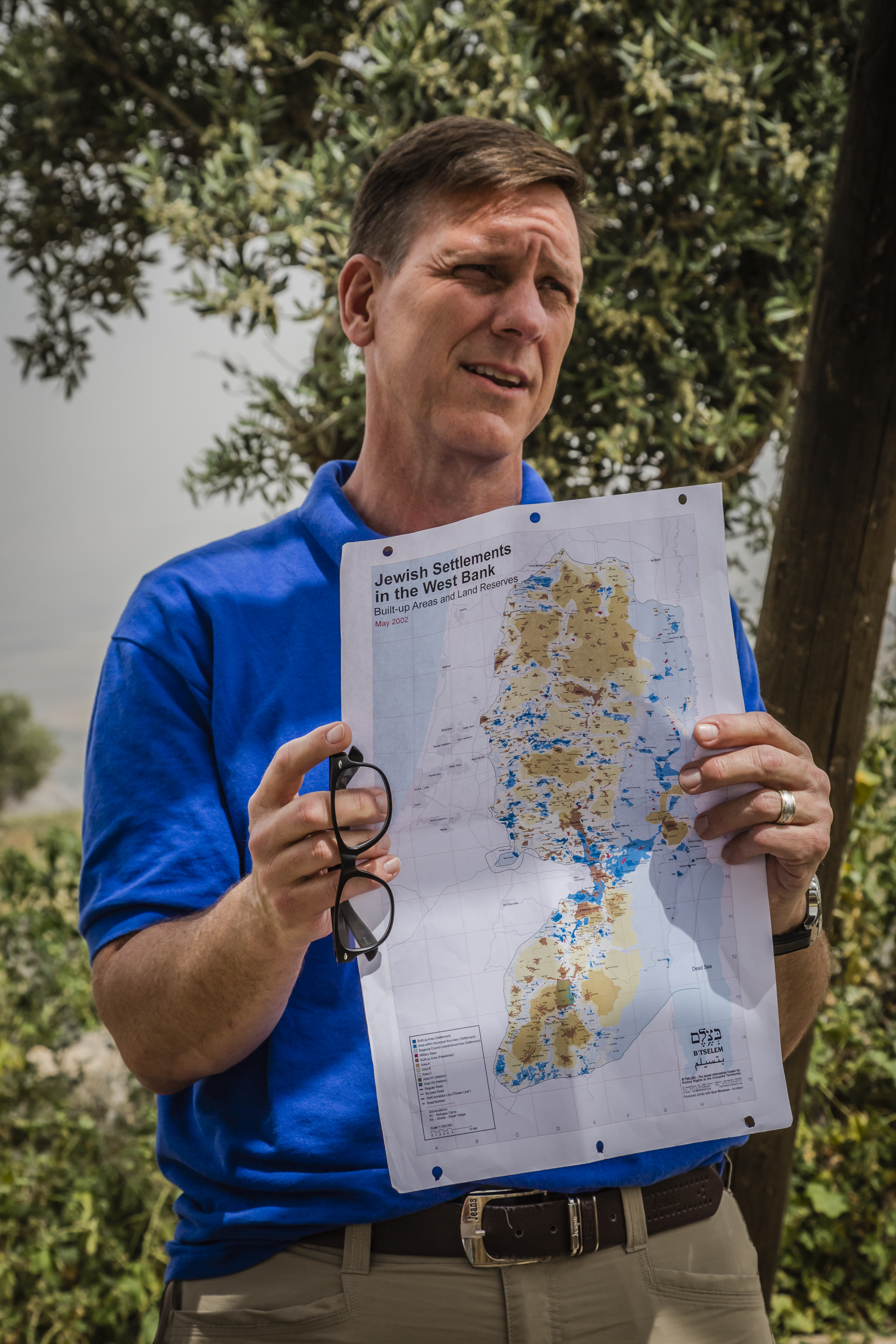
On my first trip to the Bible lands, we tried something interesting. We stood where many believe Jesus preached from a boat near the Sea of Galilee (Luke 5:1-11). With the wind at his back, one of my classmates read from the Bible down by the water, and I sat almost 300 feet up the hill—about the length of a football field. That’s a long way, isn’t it?
And Jackson, I kid you not—I heard every word he read from the Bible. The wind coming off the water carried His words right up the hillside, like a home run ball being carried by the wind.
Think of Your Catcher’s Mitt
Jackson! There was something else at that location which helped to carry and lift the sound of his voice. It wasn’t just the wind, but also the shape of the hill where we conducted our experiment. It reminded me of an outdoor theater, or the auditorium at the Katy church building—except much steeper of course.

Its shape also reminded me of a great big catcher’s mitt—wide up top, narrow at the bottom. Your catcher’s mitt is made to catch a baseball. That hillside had a shape that could catch sound.
And, because the ground was hard, not soft like your mitt, the sound bounced around like the ball in your Poppa Lewie’s pinball machine. Hard surfaces help sound bounce and travel.
Ancient Theaters Did This on Purpose
People in Bible times figured this out too. They built theaters that used the same basic shape of an opened catcher’s mitt. They also designed them with hard marble seats to help the sound bounce around like a pinball.
Your Yaya and I explored a big outdoor theater in ancient Ephesus—the same one mentioned in the Bible (Acts 19:29-31). Archaeologists say it once held about 25,000 people. That’s a whole lot more than your auditorium can fit at the Katy Church of Christ – it can only hold around 700 people.
With a design like that—sloped seats, curved stone walls, hard surfaces—the voice of one speaker from down at the bottom could reach every person there. No microphone needed. That’s how someone like Damaris could hear everything clearly.
All of this works because God made a world full of things we can see—like hills and stones—and things we can’t see—like sound waves and tiny molecules. So, you see they could hear without someone using a microphone. Pretty amazing, isn’t it?
Love,
Pa
P.S. Here are some experiments that will help you to learn about sound.
Aiding Sound by Wind and Bounce
Outside Test
Ask your sisters to sit on the grass with their backs to the wind.
Walk 20 steps away and face away from them.
Read Acts 19:29-36 in a normal voice.
Ask if they heard what you were reading.
Now switch places and read Acts 19:29-36
Discuss whether or not the wind helped your sisters to hear your voice
Inside Test
Have them sit on the fireplace hearth.
Stand in the dining room with your back to them.
Read Acts 19:29–36.
Ask if they could hear the story.
Think about how sound bounced off the walls in the dining room so that your sisters could hear your voice.
See How Sound Travels

To see how sound travels, throw a rubber ball inside a small room with concrete walls and a hard surfaced floor. It’s the kind of room similar to a racquetball court. If you have you have ever seen and heard a game at a racquetball court, you will notice that is usually very noisy? Just like a ball can easily bounce around, so do sound waves. When sound hits something hard, like the marble surfaces at ancient theaters mentioned in the Bible it bounced like a ball, back and forth all over the audience.

By John W. Moore



Comments