

TALES FROM THE GRAVE: NUMBERS 6:24-26 AND THE KETEF HINNOM SCROLLS
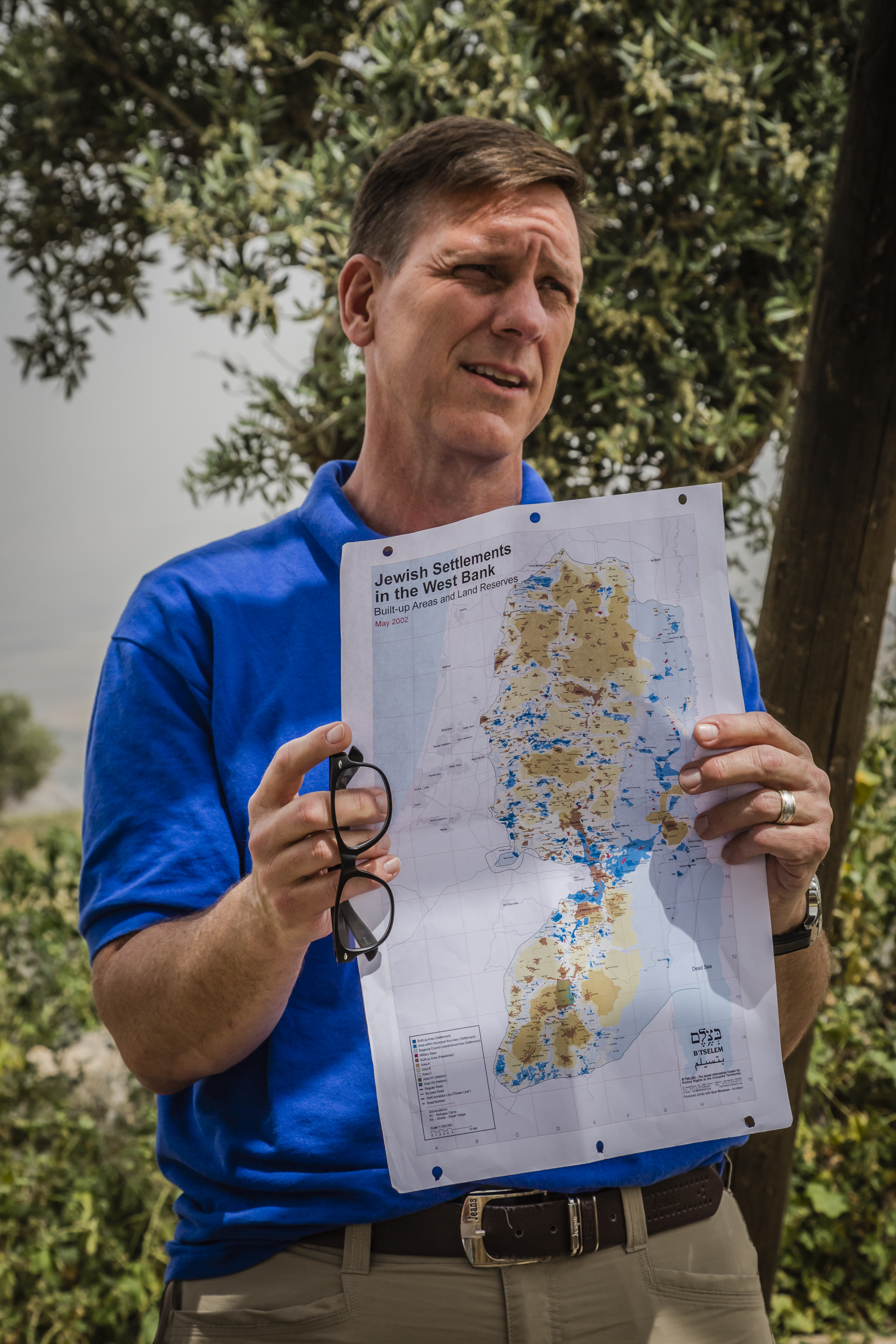

Sitting at the opening of a 2,700 year-old tomb near Jerusalem, Dr. Gabriel Barkay reflected upon one of the world's most celebrated discoveries: “I couldn’t bear the sight of this boy anymore." He was remembering how Nathan had continuously tugged at the back of his shirttail as he directed a major archaeological dig southwest of Jerusalem. He was “always asking silly questions, but so it happens,” as Barkay continued, “he made one of the most important discoveries in my life"--a discovery hailed as one of the greatest of the 20th century.

Dr. Gabriel Barkay was born in the Jewish Ghetto in Budapest during the days of the cruel Nazi regime. He and his family would eventually relocate to Israel where “Gabby”, as he affectionately became known by many, soon developed an interest in ancient artifacts and in the religious history of his family heritage.
Eventually enrolling at Tel Aviv University, Gabby began pursuing a degree in archaeology, with a dissertation planned for the study of ancient urban development outside the city of Jerusalem. “I tried to put myself into the shoes of the people,” he said. “Where would I put quarrying? Where would I put burial activities? Where I would put large public gatherings, etc?” His research and quest for new discoveries led him to a rocky knoll southwest of Jerusalem, just above the Hinnom valley and just below the modern-day Scottish St. Andrew’s Church.

After an initial site survey yielding several pieces of ancient pottery, Dr. Barkay began excavating the site, known today as Ketef Hinnom, between 1975 and 1989. His discoveries included a wealth of artifacts which spanned from the era of the first Temple period to the latter years of the Ottoman empire.
The most fascinating part of the excavation occurred when Dr. Barkay’s team uncovered seven burial caves. Each carefully chiseled cave contained separate chambers with stone benches carved into the bedrock large enough for several decaying bodies. Some of the tombs also contained bone repositories underneath the benches which had been in use for generations of deceased family members.
"The burial of the flesh took place upon the benches [and] the burial of the bones took place down below. So, they collected the bones after the decay of the flesh in order to make room for the next generation upon the benches" (Dr. Gabriel Barkay)
These carefully crafted tombs had been cut from the shoulder of the hard limestone hill along the main road between Bethlehem and the ancient city of Jerusalem. The Hebrew word for “shoulder” is ketef and this name, along with hinnom from the name of the valley below the hill, was chosen to name the site “for want of a historic Hebrew name…and its topographic situation” (Barkay, Geva 85).

Cave 24 contained what today are called the Ketef Hinnom scrolls. Found in a bone repository identified as chamber #25 within Cave 24, Dr. Barkay describes the cave as follows:
[The cave] had a large entry hall…flanked on all sides by 5 burial chambers…each of them [chambers] was meant for another son of the founding father. This chamber has three benches upon which they stretched the bodies. The benches are equipped with scooped out headrests for the heads of the deceased…down below underneath the benches we have the repository which was for the secondary burial. The burial of the flesh took place upon the benches [and] the burial of the bones took place down below. So, they collected the bones after the decay of the flesh in order to make room for the next generation upon the benches. (Kent Film Interview).

At first, it was thought that the repository in chamber #25 was completely devoid of artifacts, but it was later determined to have contained “a rich treasure without precedent in Jerusalem digs” (Barkay, Geva 99). Some of those treasures consisted of jewelry, weapons, pottery, and the now famous silver amulets (i.e. a small ornament of charm believed to bring a blessing) known as the Ketef Hinnom scrolls.
In the book Ancient Jerusalem Revealed, Barkay confesses that, “the fondest dream of every archaeologist working in Israel and especially in Jerusalem is to discover written material” (Barkay, Geva 102). Cave 24 helped to make those dreams become a reality, as two tiny silver inscribed scrolls were among the many first temple period artifacts to be found. The larger of the scrolls measured 3.8 inches in length and approximately 1inch in width. It had been rolled into a neatly compressed scroll that undoubtedly had been worn about the neck as religious jewelry.

This famous amulet, now on display in the Israel museum, was inscribed with the priestly blessing of Numbers 6:24-26 and written in Paleo-Hebrew. Dating to the 7th century B.C., it was at one time thought to have contained the oldest known written reference to the four Hebrew letters spelling God’s name, Yahweh (known as the “Tetragrammaton” and rendered “Jehovah” in older English versions of the Bible). While older artifacts have been discovered which show an earlier use of the four-letter name for God, the Ketef Hinnom scrolls remain the oldest known surviving complete verse of scripture from the Hebrew Bible.
Dated some 450 years older than the Dead Sea Scrolls and matching nearly word for word the Masoretic text of the Bible, the Ketef Hinnom scrolls are but one more example of the rich heritage and legacy of the Hebrew Bible. It serves as evidence against critics (e.g. Lemche and others of the University of Copenhagen) who claim that the Old Testament was the product of the Hellenistic period (4th- 2nd century BC), suggesting that early Israelite history is largely legendary or mythological.
" Then suddenly, when I turned around, I saw him holding 2 pottery jugs intact. I was ready to suffocate him on the spot! (Dr. Gabriel Barkay)
Thus, from an apologetic perspective, the Ketef Hinnom scrolls discovered in burial cave 24 are of grave importance (pardon the pun). This beautifully designed amulet with a carefully inscribed verse of the Bible is physical evidence confirming that a text from the Bible was already well-known and in common use in the 6th century B.C. (cf. Proverbs 6:21; Isaiah 3:20). That a family member would choose to include it among important funerary objects also reveals the high degree of respect and value placed on scripture—much like someone today might insert a Bible or photograph into the casket of a beloved family member.

But, in addition to the scrolls contribution in defending the historicity of the Bible, there is a compelling argument to be made for the scroll’s providential preservation and discovery.
Like the Dead Sea Scrolls and their accidental (or perhaps, providential) discovery in 1947 by a young Bedouin looking for lost sheep, the silver amulets were also accidentally discovered. In the case of the Hinnom Valley scrolls, the discovery was made by Nathan—the boy who kept bothering and tugging at Dr. Barkay's shirttail.
When the bone repository of chamber 25 was initially discovered at Cave 24, Dr. Barkay found virtually nothing on its limestone floor. Believing that looters from previous generations had beaten him to the punch, he soon went about his excavation in another area of the dig.
In a bit of reprisal toward Nathan’s irritating behavior, Dr. Barkay confessed to assigning him a difficult task in the cramped and isolated repository of chamber 25. An interview with Dr. Barkay reveals the following:
I couldn't bear the sight of this boy anymore… I gave him the job of cleaning up that place for photography. I told Nathan that the repository had to be as clean as his mother's kitchen—even if he had to lick it clean. It had to be spotless for the photograph to be taken. While he was there, he became bored and began banging a hammer on the floor. After a while…I feel my shirt being pulled from behind. Then suddenly, when I turned around, I saw him holding 2 pottery jugs intact. I was ready to suffocate him on the spot! It was against all possible instructions. I went back with him [to the repository] and then I realized what happened. Apparently, a layer of rock from the cave ceiling had collapsed and covered the repository floor. Nathan's hammering had broken it up and revealed the hidden treasure below. (Kent Film Interview)

What had seemingly been an innocent act of boredom on the part of a young would-be archaeologist resulted in the discovery of one of the most important artifacts known to the Jewish and Christian communities. Nathan’s banging away at the floor of the repository had revealed that it wasn’t a floor at all. The collapsed ceiling had covered and thus preserved the treasure trove of artifacts that were just waiting for someone to discover: someone like Gabby Barkay who would carefully document and preserve them.
Such important artifacts relating to biblical history, and written on silver, remind me of Psalm 12:6-7 which says, “The words of the Lord are pure words, like silver tried in a furnace of earth, purified 7 times. You shall keep them, O Lord, you shall preserve them from this generation forever.”
Indeed, God’s word has been preserved forever. While the rock cave which once encompassed burial chamber 24 is no longer in use after being quarried by previous generations and destroyed by time, God’s word is preserved and is the cornerstone for living for countless souls alive today.
Instead of being forgotten or destroyed, the Bible—and in particular the priestly blessing found at Ketef Hinnom—is one of the most visible and remembered verses of the Bible. It is still in use in Jewish and Christian prayers, important holidays and in the inauguration of United States presidents. As a child I remember hearing it sung by teenagers from Medina children’s home in Texas. I have personally recited it at numerous weddings I officiated. Most recently I heard it used by a Rabbi and friend who lives in Israel, when my wife and I sat down for Shabbat dinner in his home near Jerusalem.
The importance of the Ketef Hinnom scrolls cannot be overstated. Certainly, it is critical to our understanding of its use during the ancient period of Jewish history. However, its importance and meaning to our personal lives today is paramount and what is really most important of all. The theology of this text is of highest order, and even greater attention should be given to its meaning rather than to the silver amulet upon which it is inscribed, or the cave in which it was found.
What greater blessing could one receive than the peace of God and for his face to shine upon them? Knowing of his divine favor and presence in our life is unmatched in terms of personal gratification and hope. It is this peace and divine presence that Jesus, as God’s son, offers as well (John 14:23-27). And so, it is only fitting that I should leave you, the reader, with these final words as well.
“The LORD bless you and keep you; the LORD make His face shine upon you, and be gracious to you; the LORD lift up His countenance upon you, and give you peace.” (Numbers 6:24-26).
These words were powerful 2,700 years ago when they accompanied the body of a Jewish soul to a tomb. They are powerful still and the greatest blessing ever desired.
By John W. Moore
Works Cited:
Geva, Hillel (editor), Ancient Jerusalem Revealed. “Excavations at Ktef Hinnom in Jerusalem” by Gabriel Barkay; Israel Exploration Society, Jerusalem 1994 (85-106).
Kent, Gary. The Incredible Journey. The Mystery of the Silver Scrolls. https://www.youtube.com/watch?v=UTrNyT6KeNw
If you find our resources valuable, please partner with us in bringing the Bible to Life.


Comments